
Intro
Use Pinterest to grow blog traffic is one of the most effective strategies beginners are using in 2025 — especially those who prefer faceless content instead of creating videos or becoming influencers.
Pinterest is one of the few platforms where faceless bloggers can still grow consistently. Unlike Instagram or TikTok, Pinterest works like a search engine. This means your content can continue bringing visitors months after you publish it.
In this guide, I’m sharing the exact beginner-friendly process I use to grow blog traffic using Pinterest — including how I choose topics, design pins, and track what’s actually working.
Even with a small account, Pinterest can bring steady clicks when you follow a clear strategy.
Affiliate Disclosure
This post contains affiliate links. This means I may earn a small commission if you purchase through them, at no extra cost to you. I only recommend tools I personally use.
Why Pinterest Works for Beginner Bloggers
Pinterest is ideal for bloggers who want traffic without becoming influencers.
You don’t need:
- Followers
- Reels
- Personal branding
- daily posting on social media
Pinterest users actively search for solutions, ideas, and guides. This makes it a strong traffic source for topics like:
- Blogging tips
- Affiliate marketing
- passive income ideas
- Productivity systems
- online business strategies
Another advantage is longevity. A single pin can generate traffic for weeks or even months.
For my blog, Pinterest is the main traffic source because it supports long-term growth.
How to Use Pinterest to Grow Blog Traffic (Step-by-Step)
Step 1: Choose Blog Topics People Search on Pinterest
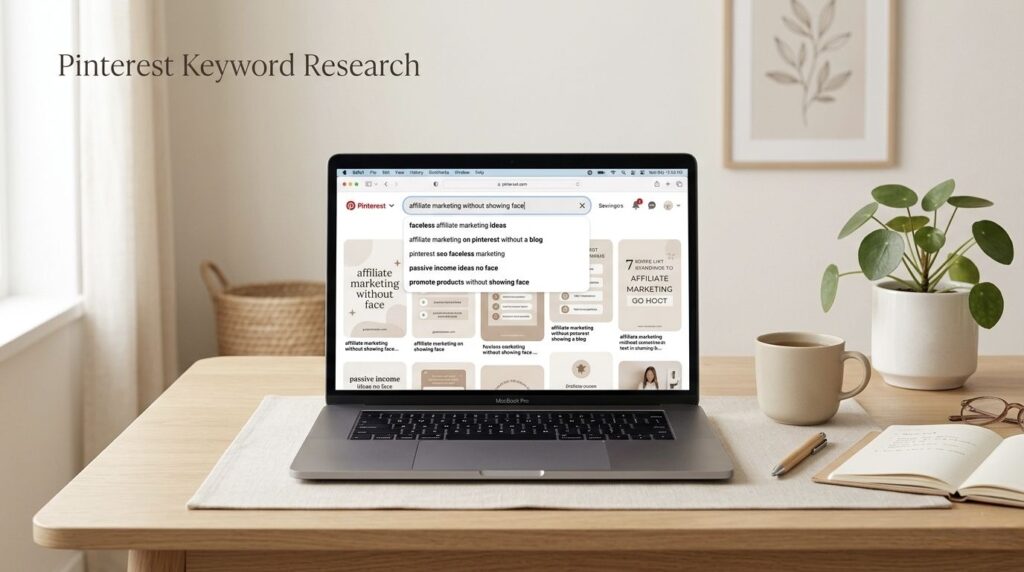
Before writing a blog post, I check Pinterest search suggestions to understand what people are already looking for.
For example, when researching ideas for affiliate content, I typed phrases like:
affiliate marketing without showing face
faceless blogging ideas
passive income blogging
Learning how to use Pinterest to grow blog traffic helps you create content based on real search demand instead of guessing random blog topics.You can learn more about how Pinterest search works here.
If you’re unsure what to write about, explore faceless affiliate niches that beginners can start to find topics that already match Pinterest search interest.
Creating content based on search demand increases the chances of your pins getting impressions and clicks.
Choosing topics based on search demand improves your chances of getting Pinterest traffic for blog growth consistently.
Step 2: Create Clickable Pins Without Showing Your Face
Pinterest users decide quickly whether to click or scroll past a pin.
Simple designs usually perform better than complex ones.
I create my pins using Canva because it’s beginner-friendly and fast.
What works well:
- bold, readable text
- Simple layouts
- clear topic focus
- consistent colors
- Vertical format
Avoid using too many fonts or colors. Clean designs are easier to understand and often perform better in search results.
Using Canva templates that improve Pinterest clicks can also save time and maintain design consistency across pins.

Step 3: Write Titles and Descriptions That Match Search Intent
Pinterest SEO depends heavily on keywords.
Include relevant keywords naturally in:
- Pin title
- Pin description
- Blog title
Example keyword phrases:
Pinterest traffic tips
faceless blogging strategy
affiliate marketing for beginners
blog traffic ideas
Instead of stuffing keywords, focus on writing clear descriptions that explain what the reader will learn.
Curiosity also improves click-through rate.
Example title angles:
“How I Started a Blog Without Showing My Face”
“Beginner Pinterest Strategy That Drives Traffic”
“Simple Blog Traffic Tips That Work in 2026”
Many beginners struggle because of unclear messaging, which is one of the common faceless blogging mistakes beginners make when starting.
Pinterest understands context, so natural writing works better than repeating the same phrase multiple times.
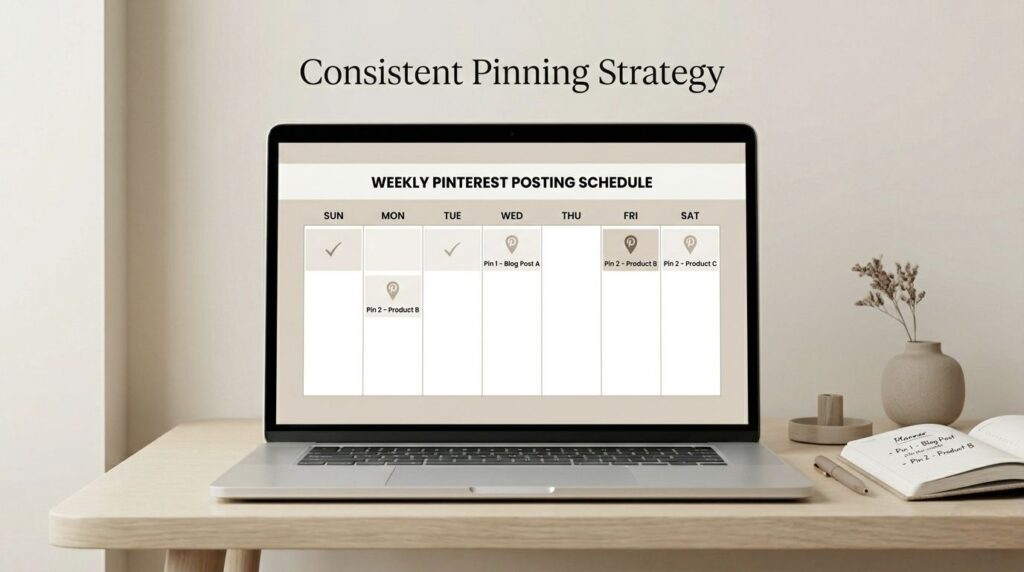
Step 4: Post Pins Consistently
Consistency is one of the biggest factors in Pinterest growth.
I aim to post 3–5 fresh pins daily across relevant boards.
Some days I post fewer pins, but regular activity helps Pinterest understand what my content is about.
Posting more pins increases the chances of reaching new audiences.
Consistency is important when you want to use Pinterest to grow blog traffic steadily over time, especially if your blog is new.
Step 5: Track What Pins Bring Traffic
Pinterest analytics shows which pins perform best.
Key metrics to watch:
- Impression
- Saves
- Outbound clicks
Even small numbers at the beginning are normal.
One of my early pins reached over 500 impressions, which showed me that Pinterest rewards consistency even for new accounts.
Each month, I review which topics and designs perform best and create similar pins.
Small improvements over time can significantly increase blog traffic.
Common Beginner Mistakes
Many beginners slow their growth by making avoidable mistakes.
1. Repinning too much: Pinterest prioritizes fresh content. Creating new pins usually works better than only repinning.
2. Over-designing pins: Too many fonts or colors can make pins difficult to read.
3. Ignoring descriptions: Pins without clear topics are harder for Pinterest to understand.
4. Expecting instant traffic: Pinterest growth usually takes time.
Improving just these basics can increase visibility significantly.
Building a Long-Term Pinterest Strategy
Pinterest works best when your content follows a clear structure.
If you’re planning consistent growth, follow a step-by-step faceless affiliate marketing roadmap to build a system that supports long-term traffic.
Understanding how faceless bloggers structure their income system can also help you create content that supports monetization instead of random posting.
When your blog topics, pins, and keywords align, Pinterest becomes easier to scale.
Final Thoughts
Pinterest is one of the most beginner-friendly traffic sources for faceless blogs.
When you use Pinterest to grow blog traffic, small improvements in pin design and keyword targeting can create long-term results.
Results are not instant, but consistent effort can create long-term growth.
Even one well-performing pin can bring steady traffic over time.
With the right system, Pinterest traffic for blog posts can grow steadily over time.
If you focus on clear topics, simple design, and consistent posting, Pinterest can become a reliable source of blog visitors.
Start simple and improve gradually.
Traffic compounds over time.
Leave a Reply