
If you’ve been searching for ways to make money online without showing your face, creating videos, or constantly being “on camera,” you’ve probably come across the term faceless blogging.
It sounds perfect, right?
Write a few posts, add some links, and money magically appears.
But let me be honest with you:
That is not how this works.
Most people fail at faceless blogging not because it doesn’t work — but because they misunderstand what it actually is.
This guide will show you the real system behind faceless blogging using Pinterest. No hype. No fake screenshots. No unrealistic timelines.
Just a clear, logical, beginner-friendly path.
Before You Start: What Most People Get Wrong About Faceless Blogging
Most people think faceless blogging means:
• No effort
• No strategy
• No learning
• Easy passive income
That’s why they quit.
Faceless blogging doesn’t mean “doing nothing.”
It means building a system that works without relying on your personal identity.
You are not the brand.
Your content is.
This is powerful because:
• You don’t need confidence on camera
• You don’t need to reveal your personal life
• You don’t need to build a personal brand
• You don’t need to go viral
You need structure.
And this is where Pinterest changes everything.
Why Pinterest Fits Faceless Blogging Perfectly
Pinterest is not social media. It’s a visual search engine.
People come to Pinterest looking for:
• Solutions
• Ideas
• Guides
• Tutorials
• Systems
Which makes it perfect for faceless blogs.
In this guide, I’ll show you:
• What faceless blogging actually is
• Why Pinterest is the best traffic source for it
• How the full system works
• How money is made (realistically)
• What beginners should focus on
• What mistakes to avoid
• A 30–60 day action plan
If you’ve ever felt confused, stuck, or overwhelmed — this will make everything clear.
What Faceless Blogging Really Means (And What It Doesn’t)
Faceless blogging means building a content-based website where your identity is not the product.
Your content is.
You are not selling your personality.
You are solving problems.
That’s it.
Faceless blogging is about:
• Educational content
• Informational guides
• How-to posts
• Comparisons
• Step-by-step systems
Not selfies.
Not vlogs.
Not personal stories.
What Faceless Blogging Is NOT
Let’s kill some myths.
Faceless blogging does NOT mean:
❌ You don’t work
❌ You don’t learn
❌ You don’t build skills
❌ You don’t think strategically
❌ You earn instantly
It is still work.
But it is system-based work.
You build once → it works repeatedly.
Who Faceless Blogging Is For
This is perfect for you if:
• You don’t want to show your face
• You don’t like making videos
• You prefer writing or explaining
• You like systems
• You want long-term income
Who Should NOT Do This
This is not for you if:
• You want fast money
• You hate learning
• You quit easily
• You want instant results
• You dislike planning
This filters out dreamers.
Faceless blogging rewards people who think long-term.
Why Pinterest Is the Best Platform for Faceless Bloggers
Most beginners fail because they try to grow on platforms that are not built for beginners.
Instagram, TikTok, and YouTube require:
• Personality
• Charisma
• Consistency on camera
• Strong personal branding
• Algorithms that favor creators
Pinterest doesn’t.
Pinterest works like Google.
People search for things like:
• How to start a blog
• How to make money online
• Faceless income ideas
• Pinterest traffic tips
• Beginner blogging guides
That’s why Pinterest is powerful.
Pinterest Is a Search Engine, Not Social Media
On social media, content dies fast.
On Pinterest, content can rank for months or years.
Your pin today can still bring traffic next year.
That’s how you build a system.
Not virality.Not trends.Not luck.
Why Pinterest Works So Well for Faceless Bloggers
Pinterest favors:
• Helpful content
• Clear titles
• Strong visuals
• Step-by-step ideas
• Informational posts
Not personality.
Not dancing.
Not talking.
Just clarity.
How Pinterest Traffic Actually Works
Pinterest users:
1. Search a topic
2. See your pin
3. Click it
4. Read your post
5.Take action
This is intent-based traffic.
They are already looking for solutions.
You are not interrupting them.You are helping them.
Why This Is Long-Term (Not Viral)
Viral content fades.
Search-based content compounds.
Faceless blogging with Pinterest is slow in the beginning — but powerful later.
That’s the trade-off.
Fast = unstable
Slow = sustainable
How Faceless Blogging Actually Makes Money (The Big Picture)
Before we go into steps, you need to understand the system.
Faceless blogging is not about random posting.
It follows this flow:
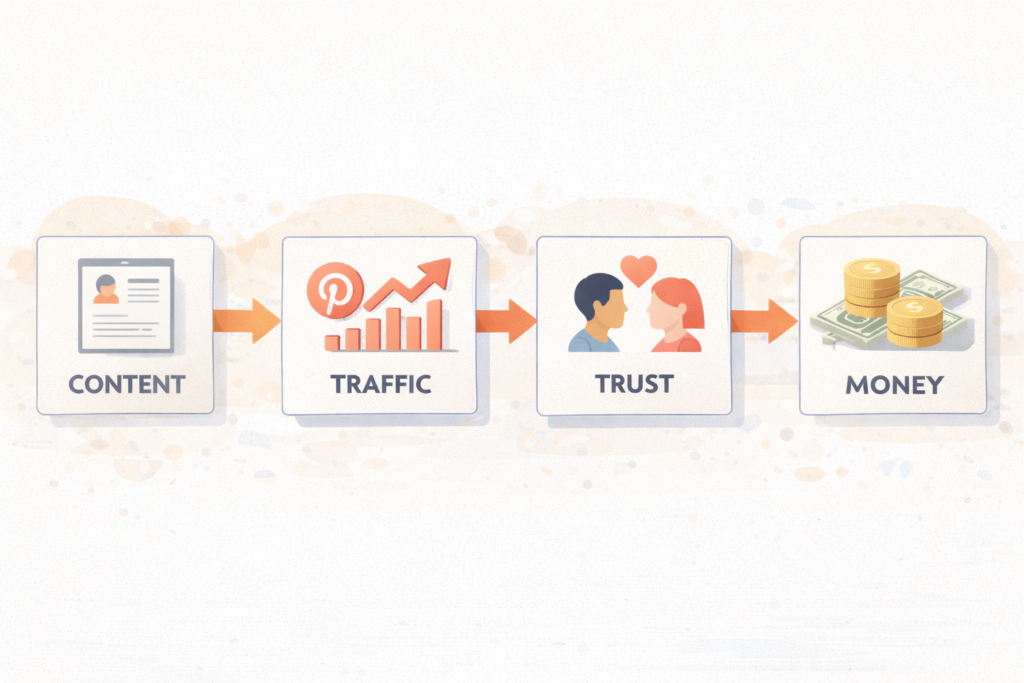
Content → Traffic → Trust → Monetization → Scale
Most beginners break this by skipping steps.
They jump to monetization before building trust.
They chase traffic without good content.
They post randomly without a system.
Then they quit.
Why Random Posting Fails
Random posting looks like this:
• No niche clarity
• No content structure
• No long-term plan
• No audience focus
• No monetization logic
This leads to:
• Confusion
• Burnout
• Low conversions
• No growth
Why Systems Win
A system means:
• Every post has a purpose
• Every pin leads somewhere
• Every section supports another
• Everything connects
This guide is your system.
The Complete Faceless Blogging System (Step-by-Step)
Now we get practical.
Step 1: Choosing the Right Niche (So You Don’t Struggle Later)
Your niche decides everything.
Traffic.
Trust.
Monetization.
Most beginners fail here because they choose vague niches.
Bad examples:
❌ “Make money online”
❌ “Lifestyle”
❌ “Motivation”
❌ “Business”
These are not niches. They are topics.
What a Real Niche Looks Like
A good niche has:
• A clear problem
• A clear audience
• A clear solution
For example:
• Faceless blogging for beginners
• Pinterest traffic for bloggers
• Affiliate blogging without showing face
Your niche should answer:
Who is this for?
What problem does it solve?
Why should they trust you?
Your Positioning
Positioning is not about being unique.
It’s about being clear.
If someone lands on your site, they should instantly understand:
What this blog helps with.
No guessing.
Step 2: Simple Blog Setup (Without Technical Overload)
You do NOT need:
❌ Fancy themes
❌ Expensive tools
❌ Custom designs
❌ Advanced coding
You need:
• A clean theme
• Fast loading
• Mobile-friendly layout
• Simple navigation
That’s it.
Beginner Setup Mistakes
Avoid these:
• Over-customizing
• Installing too many plugins
• Changing design every week
• Delaying content
Your blog is not a decoration.
It’s a tool.
Step 3: How to Structure Your Content for Long-Term Growth
This is where most bloggers mess up.
They write random posts without a structure.
You need two types of content:
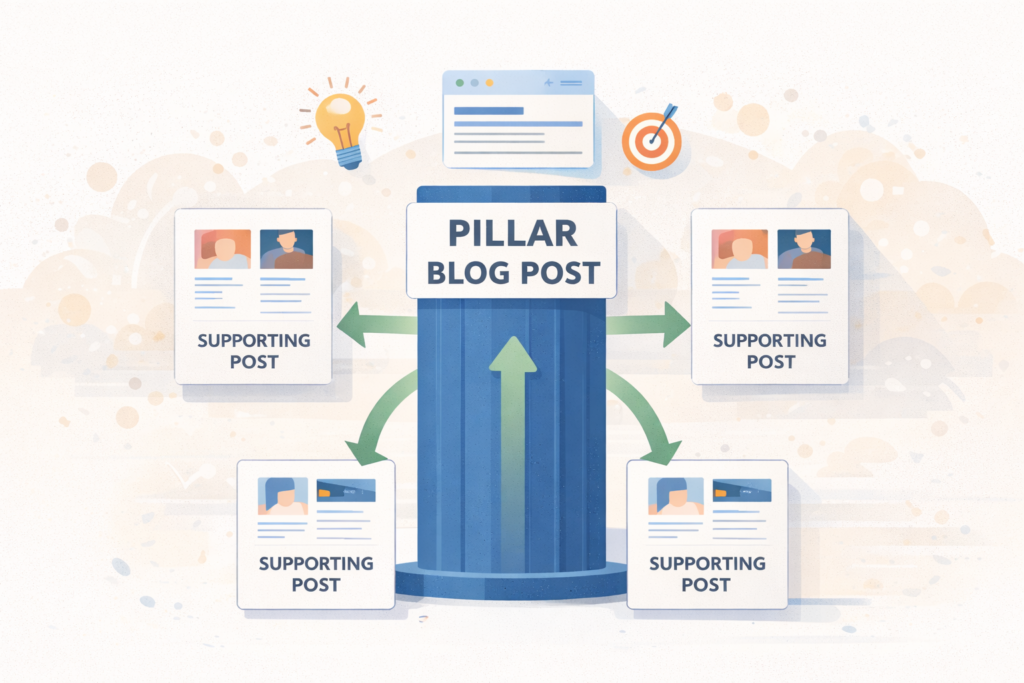
Pillar Posts
These are:
• Long
• Detailed
• Foundational
• Authority-building
This post you’re reading is a pillar.
Pillar posts explain your entire system.
Support Posts
These go deeper into specific parts of the system.
For example:
• Pinterest traffic guides
• Canva tutorials
• Monetization breakdowns
• Tool comparisons
Each support post should link back to your pillar.
This builds authority.
How Many Posts Do You Need?
Not 100.
Start with:
• 1–2 pillar posts
• 8–12 support posts
That’s enough.
Step 4: How Pinterest Traffic Actually Works
Pinterest is not random. It follows patterns.
If your pins are not getting reach, it’s not bad luck — it’s bad alignment.
Pinterest wants:
• Clear ideas
• Clear titles
• Clear visuals
• Clear intent
Not pretty designs.
Not trendy colors.
Not aesthetics.
Clarity beats beauty.
How Pinterest Reads Your Content
Pinterest looks at:
• Your pin title
• Your description
• Your keywords
• Your landing page content
• Your consistency
If these don’t match, Pinterest doesn’t push your content.
Everything must align.
Why Some Pins Get Traffic (And Some Don’t)
Winning pins:
• Solve one problem
• Have a clear promise
• Match search intent
• Link to helpful content
Losing pins:
• Are vague
• Are clickbait
• Don’t deliver
• Confuse users
Pinterest rewards satisfaction.
What Pinterest Actually Wants
Pinterest wants users to:
1. Click your pin
2. Stay on your page
3. Find what they expected
4. Take action
If that happens, Pinterest shows you more.
Step 5: Turning Visitors into Trust (Not Just Clicks)
Traffic alone doesn’t pay.
Trust does.
Most beginners focus on clicks, not connection.
Your blog must:
• Answer questions
• Remove confusion
• Guide logically
• Build confidence
When people feel understood, they trust you.
How Trust Is Built
Trust comes from:
• Clarity
• Simplicity
• Honesty
• Consistency
Not from hype.
Why Most Blogs Fail Here
They:
• Overwhelm
• Overcomplicate
• Overpromise
• Underdeliver
Your job is to make things easier.
Step 6: How Faceless Blogs Really Make Money
Let’s clear one thing first:
Traffic alone does not make you money.
Trust does.
Most beginners fail because they either:
• Push affiliate links too early
• Sound desperate
• Promote without explaining
• Or don’t connect the tool to a real problem
That never works long-term.
The correct flow
Help → Educate → Guide → Recommend
Not: Recommend → Recommend → Recommend
Your job is not to sell.
Your job is to solve problems.
How Faceless Blogs Actually Make Money
Faceless blogs earn when readers:
1. Land on your content
2. Understand the solution
3. Trust your explanation
4. Take action using your recommendation
That’s it.
No tricks.
No hacks.
No shortcuts.
What Converts (And What Doesn’t)
What works:
• Step-by-step guides
• Honest breakdowns
• Comparisons
• Real use-cases
• Beginner explanations
What doesn’t:
• “This made me $10,000” claims
• Fake urgency
• Forced links
• Empty hype
Faceless blogs convert through clarity, not emotion.
Step 7: How to Grow Without Burning Out
Scaling is not about posting more.
It’s about posting smarter.
How This Grows Over Time
First: You build
Then: Traffic comes
Then: Trust builds
Then: Income starts
Then: You reinvest
This is compounding.
More Content vs Smarter Content
100 random posts = chaos
30 strategic posts = authority
Authority wins.
Disclosure: Some of the links below are affiliate links. This means I may earn a small commission at no extra cost to you. I only recommend tools I personall
Tools That Make Faceless Blogging Easier
You do not need a lot of tools to start faceless blogging. But the right ones can save time and reduce confusion.
1. Design & Visuals
If you want Pinterest traffic, your visuals matter.
Canva (the design tool I personally use) to create all my Pinterest pins, blog graphics, and thumbnails.
It’s beginner-friendly, fast, and doesn’t require any design background.
If you’re unsure whether the free version is enough, I broke it down honestly here:
👉Canva Free vs Pro for bloggers
https://quiteearner.in/canva-free-vs-pro-for-bloggers/
2. Structured Learning (Optional)
Some people prefer a clear roadmap instead of figuring everything out alone.
If you’re that type, you can explore this beginner-friendly digital skills learning platform:
This is optional.You do not need a course to succeed.
Common Faceless Blogging Mistakes Beginners Make
Most people don’t fail because faceless blogging doesn’t work.They fail because they sabotage themselves.
Here are the biggest mistakes:
1. Posting Randomly
No structure.
No plan.
No system.
This leads to confusion and burnout.
2. Chasing Money Too Early
If you try to sell before helping, people leave.
Trust comes before money.
3. Overcomplicating Everything
You don’t need 20 tools.
You don’t need fancy themes.
You don’t need perfect designs.
You need clarity.
4. Expecting Fast Results
This is not a shortcut.
This is a system.
5. Copying Trends Blindly
What works for others may not work for you.
Focus on building something sustainable.
What to Do in Your First 30–60 Days
Here’s a realistic beginner plan.
Week 1–2
• Choose niche and positioning
• Set up your blog
• Write your first pillar post
• Create 5–10 Pinterest pins
Week 3–4
• Publish 3–4 support posts
• Create pins for each post
• Learn Pinterest basics
• Fix your structure
Month 2
• Continue publishing
• Improve pin designs
• Start internal linking
• Add monetization logically
This is what consistency looks like.
Not hustle.
Not burnout.
Just steady.
Realistic Expectations: What This Actually Takes
Let’s be honest.
Faceless blogging is not instant money.
Here’s what’s realistic:
0–3 Months
• Learning
• Testing
• Low traffic
• No income
This is normal.
3–6 Months
• Some traffic
• Better clarity
• Small wins
• First clicks
6–12 Months
• Compounding
• Authority
• Growing income
• Stable system
Most people quit in the first 90 days.
That’s why it works for those who don’t.
Want a Simple Checklist to Get Started?
If you want to start this the right way, I’ve created a simple beginner checklist that walks you through everything step by step.
It covers:
• Niche clarity
• Blog setup
• Content structure
• Pinterest basics
• Monetization logic
You can get it here:
👉 Download the Faceless Blogging Starter Checklist
Leave a Reply